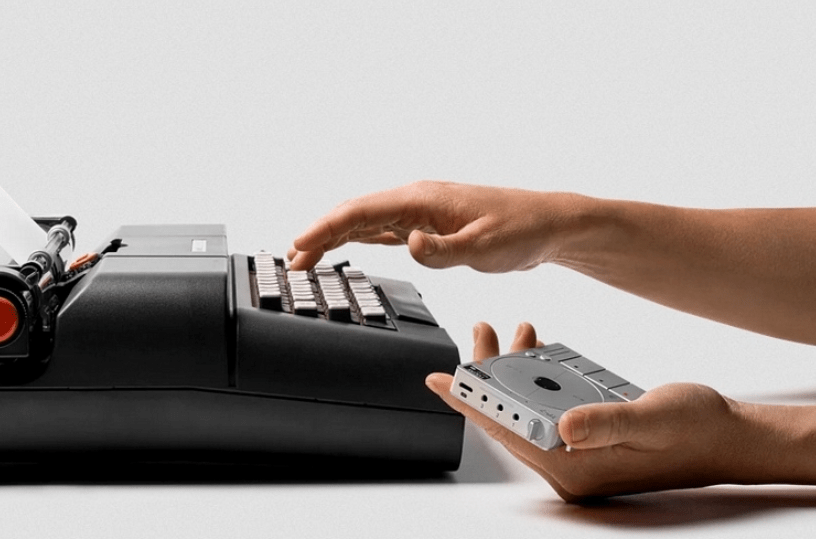
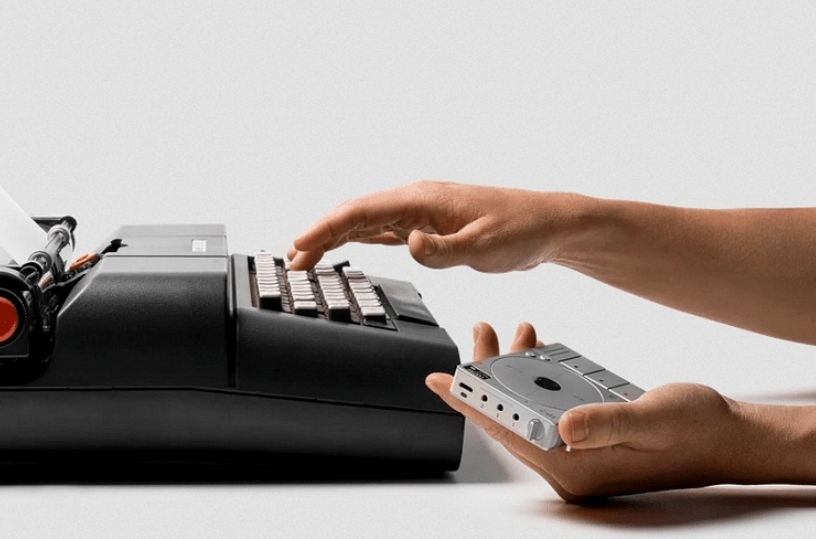
Technology has revolutionized many aspects of daily life, improving efficiency and convenience in ways that would have been unimaginable a few decades ago. From automating repetitive tasks to enhancing communication, technological advancements have made remarkable contributions to modern society. However, while technology is an excellent tool in many areas, there are certain functions it cannot replace—particularly when it comes to ensuring justice in a courtroom. The push to replace human court reporters with electronic recording devices is one such dangerous experiment, one that threatens the very integrity of the judicial system.
The move to replace them with electronic recording devices is a shortsighted, cost-cutting measure that jeopardizes justice. Courtrooms should never be in a position where a person’s fate hinges on the reliability of a machine. Unfortunately, this transition is already happening, and the consequences are dire.
A Tragic Mistake in the Making
A striking example of the dangers of electronic recording occurred in a case where a survivor of domestic violence was seeking a restraining order against an abusive ex-husband. This was a life-altering legal matter, one where precision and accuracy were essential. However, during the deposition, critical portions of the testimony were erased due to a technological failure. It was not until months later, deep into litigation, that the company responsible for transcribing the electronic recording admitted that approximately 50 pages of testimony had been lost. By then, the damage had already been done. The judge denied the restraining order, a decision based on an incomplete record. The mistake was irreversible, and the potential consequences were devastating.
This is not an isolated incident. Such errors are becoming more common as courts increasingly rely on flawed recording technology. Unlike trained human court reporters, machines cannot flag missing testimony, request clarification, or ensure every spoken word is captured. A simple technical malfunction, background noise, or even an operator’s oversight in turning on the recording device can permanently alter a case’s outcome.
Court Reporters The Guardians of the Record
Court reporters have long been recognized as the “guardians of the record” because their work forms the foundation of the legal system’s reliability. Unlike digital recordings, which are susceptible to failures, court reporters undergo extensive training to ensure they capture verbatim records of legal proceedings. In California, the standard for court reporter accuracy is an astonishing 97.5%—the highest in the nation. This level of precision is critical in legal proceedings where even the smallest misinterpretation can alter the course of justice.
In contrast, electronic recording technology simply cannot meet this high standard. The reasons for this are numerous:
- Equipment Failures Technology is not infallible. Recorders can malfunction, microphones can fail to pick up voices, and files can become corrupted or lost altogether.
- Poor Acoustics and Background Noise Courtrooms are not ideal recording environments. Overlapping conversations, ambient noise, and the natural acoustics of the room can distort recordings, making words difficult to decipher.
- Language and Dialects Electronic recording software often struggles with regional dialects, accents, and individuals who speak English as a second language, leading to inaccurate or incomplete transcripts.
- Gaps in the Record Even the best recording systems produce transcripts with “[inaudible]” or “[unintelligible]” notations, which can be devastating in a legal context. Worse, entire sections of proceedings can be lost without any indication that something is missing.
Even assuming perfect conditions, electronic recording systems require human transcription afterward, adding another layer of potential error. Unlike a live court reporter who can ask for clarification immediately, transcriptionists work from flawed recordings that provide no ability to correct misunderstandings in real-time.
A Disastrous Policy Driven by Cost Cutting
Despite these glaring risks, court officials are aggressively pushing for the expansion of electronic recording technology in California courtrooms. Their motivation is clear—budget cuts. By eliminating court reporters, courts hope to save money on salaries and benefits. However, this cost-saving measure comes at a steep price—the erosion of justice.
The shift to electronic recordings will only widen the justice gap. Wealthier litigants will still be able to hire private court reporters, ensuring an accurate record of their proceedings. Meanwhile, lower-income individuals will be forced to rely on unreliable electronic recordings, putting them at a distinct disadvantage. Justice should not be reserved for those who can afford it.
Solutions Ensuring Access to Accurate Court Records
Instead of replacing court reporters with flawed technology, lawmakers should explore alternative solutions to address staffing shortages and budget constraints while maintaining accuracy and fairness in the judicial system. Several viable options exist:
- Expanding the Court Reporter Pipeline California has a significant number of students enrolled in court reporting schools and on waiting lists. By implementing provisional licensure—similar to the approach used for attorneys—the state could fast-track qualified students into courtrooms, alleviating staffing shortages.
- Legislative Action – Passing AB 3013 This proposed bill would allow for the use of remote court reporting, enabling a single court reporter to cover multiple cases across different locations in a single day. This solution not only increases coverage, but also ensures accuracy without the need for unreliable recording devices.
- Increasing the Use of Voice Writers Voice writing technology allows trained professionals to capture the spoken word with specialized software while maintaining real-time accuracy. These professionals can provide a reliable alternative without sacrificing precision.
- Improving Wages and Working Conditions Rather than eliminating court reporters, courts should offer competitive salaries and flexible working conditions. Currently, freelance court reporters can earn upwards of $800 per appearance, making it difficult for the judicial system to compete for talent. Providing better incentives for court reporters to work within the system would help retain experienced professionals.
The Future of Justice Must Prioritize Accuracy
At the heart of this debate lies a fundamental question—can justice be left to unreliable technology? The answer is a resounding no. Court reporters are the backbone of a functioning legal system. They provide the precise, real-time transcription that courts need to ensure fair outcomes.
Allowing electronic recording devices to replace trained professionals is a reckless decision that will lead to more errors, more appeals, and more lives disrupted by preventable injustices. Lawmakers must resist the temptation to cut costs at the expense of accuracy and fairness. The integrity of the legal system depends on it.
If flawed technology is allowed to dictate legal proceedings, the foundation of justice itself is at risk. The courts must not strip away the right to an accurate record by embracing unreliable recording systems. Justice should never be left to chance, and it certainly should not be left to a tape recorder.
 STENOIMPERIUM