
In the realm of court reporting, the dichotomy between Steno Meritocracy and Social Connections presents a perennial debate. On one hand, the profession prides itself on a meritocratic ethos, where success is ostensibly determined by skill, dedication, and proficiency in stenography. However, the importance of social connections cannot be understated. Networking and fostering relationships within the community can open doors to opportunities, mentorship, and support.
Loneliness poses a significant challenge within the court reporting sector, extending beyond our professional realm to a broader societal concern affecting middle-aged women across the nation. Dr. Vivek Murthy, the Surgeon General, highlighted the alarming prevalence of America’s “loneliness epidemic” in 2023, underscoring its correlation with heightened risks of health ailments like cardiovascular disease and depression. Given the solitary nature of the court reporting profession, its susceptibility to this issue is particularly pronounced.
Court reporters, whether operating officially or as freelancers, along with CART providers and Captioners, all possess a common characteristic: exclusivity. As stenographers are entrusted with creating the official record, only one can fulfill this role. Consequently, they often find themselves working solo, traveling to job sites. In the legal sphere, court reporters compile transcripts, frequently dedicating evenings and weekends to this task when not physically present on a job. Such a schedule often entails extensive solitary hours spent preparing transcripts well into the late night and early morning.
Loneliness is a painful emotion that arises when a person perceives that he or she is alone, or is being shunned by and isolated from other people. It can stem from working in a virtual or geographically dispersed team, or from being in a team of one.
Individuals experiencing loneliness often exhibit decreased commitment, creativity, collaboration, and attentiveness, leading to a decline in both the quality and quantity of their work. Additionally, loneliness has been recognized as a contributing factor to workplace burnout.
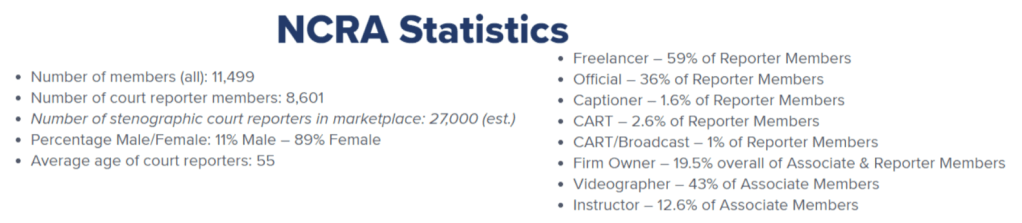
Stenographers endure feelings of loneliness to a significantly greater extent compared to the average middle-aged American. With the average age of court reporters in the U.S. hovering around 51 or 55, it’s apparent that a substantial portion of the approximately 27,000 stenographers are likely grappling with loneliness.
I once came across a claim suggesting that the suicide rate among court reporters surpassed that of dentists. Intrigued, I attempted to verify this assertion but couldn’t find any evidence to support it. However, from time to time, I encounter reports of court reporter suicides. With the proliferation of Facebook groups among court reporters, such narratives are not uncommon to stumble upon.


Why are stenographers lonelier than average Americans in Middle Age?
Cultural norms, such as an emphasis on individualism, heightened social media usage, dwindling social ties, and escalating political polarization, can exacerbate the divide among stenographers, fostering feelings of isolation. Middle-aged adults often grapple with weakened family bonds and lack the social safety nets enjoyed by the average “employed” populace, such as family leave, unemployment protection, and childcare support.
The court reporting profession places a significant amount of emphasis on individual achievement, prioritizing economic market competition, choice, and the notion of a meritocracy that rewards talent, ability, and excellence. Esteeming high achievers on a pedestal, this culture witnessed a surge in reporters obtaining credentials like RPR, RMR, RDR, CRR, during and after the pandemic. However, this emphasis on individual achievement may lead to a disconnect from others, framing the world as an individualistic competition and sidelining the importance of fostering healthy social connections.
In the realm of court reporting, an unnecessary air of competitiveness can prevail despite abundant work opportunities due to high demand. Instances of court reporters poaching clients from agencies can breed suspicion and excessive client protection measures. Such actions are deemed unethical, as they undermine the hard-earned relationships of agencies. While some may disregard ethical considerations, it’s worth noting that karma has its way of catching up with such behavior.
To address professional isolation and foster a nurturing work environment, it’s crucial to emphasize communication and camaraderie within our court reporter community. This entails organizing frequent gatherings, fostering informal social gatherings, and facilitating opportunities for open dialogue. By encouraging reporters to openly express their experiences and emotions, be it related to work or personal matters, we can cultivate stronger bonds and cultivate an environment of inclusivity and support. Here are a few more suggestions to consider.
Embrace Volunteering: By actively participating in volunteer initiatives with both your state and national associations, you not only contribute to meaningful causes but also cultivate a profound sense of purpose and fulfillment. Moreover, volunteering offers invaluable opportunities for forging deep connections and fostering a sense of community with like-minded individuals.
Be a Mentor: Offer your availability for students seeking to accumulate apprentice hours or commit to long-term mentoring relationships. Reach out to local court reporting schools, state court reporting associations, the NCRA, or Project Steno to connect with students. Additionally, students can utilize NCRA’s ProLink platform to locate reporters in their vicinity. Another resource is CoverCrow, which now offers a free mentor/mentee student matching feature. Court reporters can create a profile on this platform, allowing students nationwide to find and contact mentors in their area.
Speak at Court Reporting Colleges: Contact court reporting colleges and offer to speak to the students. You can do this remotely now. One time, I was driving home from an all-day assignment, and I pulled off the freeway into a parking lot where I was able to connect via Zoom remotely using my iPhone to give a scheduled presentation to students for an hour. It doesn’t require much preparation; just speak about what you do for a living.
Engage in Career Days: Maintain active involvement in promoting the court reporting profession by participating in career day events across various educational institutions, including colleges, high schools, and elementary schools. These occasions offer chances to expand your network and foster meaningful social connections. Utilize the resources provided by the NCRA, such as handouts and demonstrative materials, to enhance your presentation and engage students effectively.
Speak at Bar Associations & Law Schools:
Law schools no longer offer courses on making a record as electives, leaving it to court reporters to fill this educational gap for both future and practicing attorneys. You can seek approval for Mandatory Continuing Legal Education (MCLE) credits and conduct presentations at local bar associations. Additionally, engaging in networking activities at law schools and bar associations can also be beneficial in spreading awareness and knowledge on this important aspect of legal proceedings.
Participate in State & National Association Conventions: Few experiences match the energy and excitement of joining your state or national convention and engaging with fellow court reporters. There’s no one who gets a court reporter like another court reporter. The camaraderie among peers is unparalleled, offering invaluable networking opportunities and fostering lasting friendships that can uplift your spirits for weeks on end.
Help Your Fellow Court Reporters: Many court reporters are deeply engrossed in their own pursuits, often overlooking the struggles of their peers. It’s essential to pause amidst the rush, perhaps during your commute to a job site, and make at least one phone call daily to connect with another reporter and offer support. Consider scheduling a lunch meeting or extending a friendly greeting when you encounter a fellow stenographer with a recognizable roller bag. Don’t hesitate to initiate these interactions; a simple hello can go a long way in fostering camaraderie.

The most effective strategy is to invest time in getting to know and deeply understand your fellow court reporters. By doing so, you’ll be better equipped to identify when someone is feeling disconnected or excluded. Keep an eye out for any shifts in their behavior or body language. If you notice them appearing downcast, withdrawing from interactions, or experiencing a sudden decline in production, it’s evident that there’s an issue that needs attention.
Certainly, finding time for social connections can be challenging for court reporters, especially when they’re grappling with transcript backlogs and the demands of daily life. This may involve juggling additional jobs or dedicating free time to caring for children or elderly family members, given the soaring costs of caregiving. Social safety nets can help provide some financial support and stability, which, in turn, might also make it easier for people to take the time to build and nurture long-term relationships.
Balancing these two dynamics, Steno Meritocracy and Social Connections, is essential for court reporters seeking advancement in their careers. While meritocracy underscores the significance of individual achievement, cultivating social connections can offer invaluable support and growth opportunities. Ultimately, finding the right equilibrium between steno prowess and social acumen is key to thriving in the competitive landscape of court reporting.
 STENOIMPERIUM